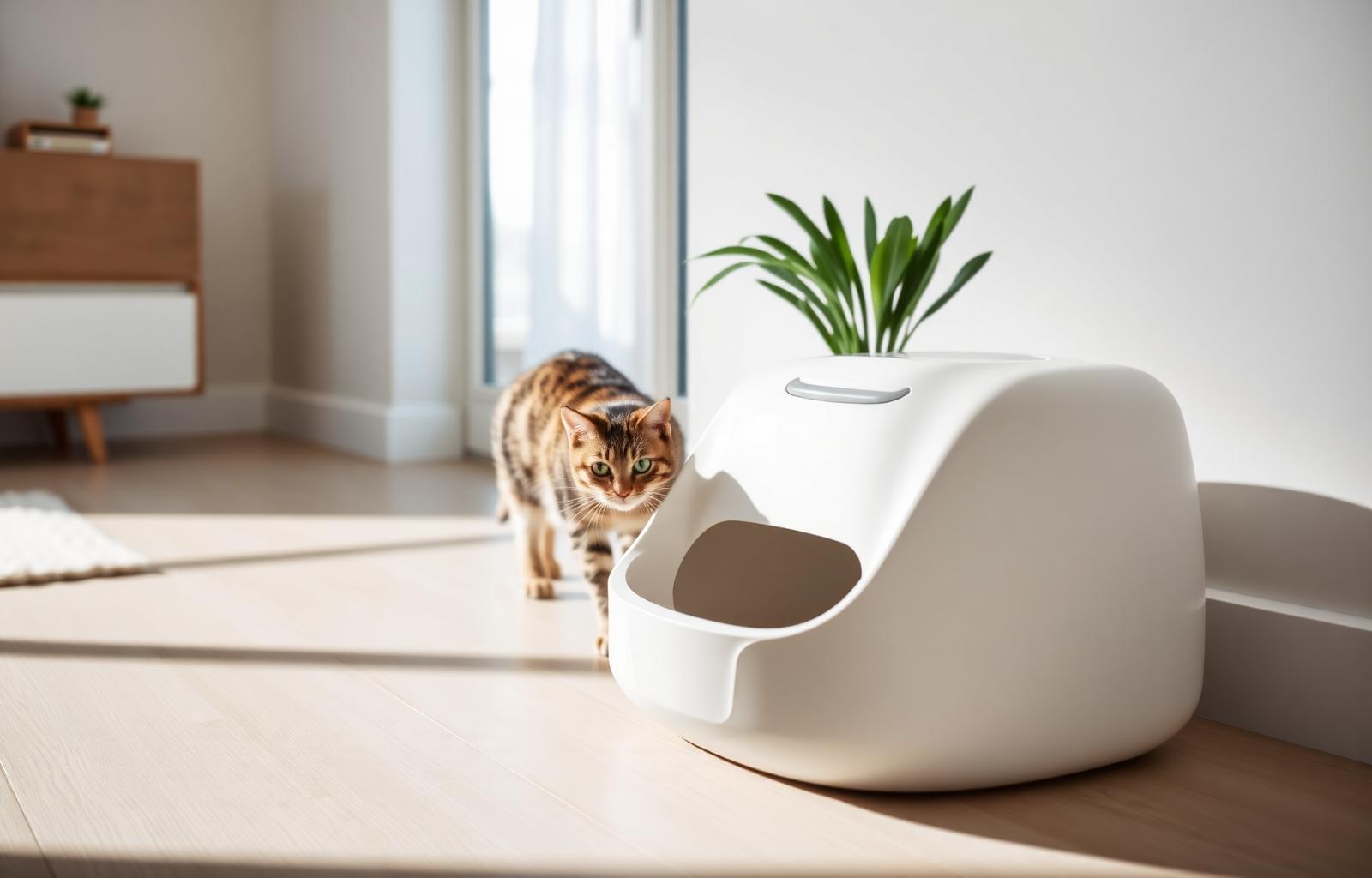
Cats are legendary for their stoicism. Driven by an evolutionary instinct to hide any signs of vulnerability from potential predators, our feline companions are masters of disguising pain, illness, and discomfort. Often, by the time a cat visibly shows signs of being unwell, their condition has already advanced significantly. This biological quirk places a heavy burden on cat owners to become diligent detectives, searching for subtle clues about their pet’s well being.
Fortunately, the modern age of pet care has provided an extraordinary tool for this detective work. Understanding how to monitor cat health with a smart litter box is rapidly becoming one of the most effective ways to safeguard your pet’s longevity. By transforming a daily chore into a sophisticated diagnostic dashboard, these devices offer invaluable insights into what is happening inside your cat’s body.
In this comprehensive guide, we will explore how advanced smart pet products are revolutionising feline healthcare, exactly what metrics you should be watching, and how you can use this data to ensure your cat lives a long, healthy, and comfortable life.
The evolution of pet care: from manual scooping to smart technology
For decades, the litter tray has been little more than a plastic box requiring daily, unpleasant maintenance. However, it has always been the primary location to check for basic health indicators, such as the consistency of faeces or the presence of blood in the urine.
When comparing a smart litter box with traditional scooping for health tracking, the differences are profound. With a traditional tray, you are relying on guesswork and memory. Did your cat urinate three times today, or was it four? Is that clump slightly larger than yesterday’s clump, or about the same? If you have multiple cats, traditional scooping makes it virtually impossible to know who produced what.
An automated litter box removes this guesswork entirely. Equipped with precision sensors, Wi-Fi connectivity, and sophisticated algorithms, a smart litter box continuously logs data without requiring any manual intervention from you.
The automated cat health monitoring benefits are immense. You receive a continuous, objective stream of data detailing your cat’s weight, visiting frequency, and the duration of each visit. This constant monitoring allows for the detection of microscopic changes in routine that a human would easily miss, shifting your pet care strategy from reactive to highly proactive.
Establishing the baseline: what is normal?
Before you can identify anomalies in your cat’s health, you must first understand their normal routine. Every cat is an individual, and their baseline metrics will depend on their diet (wet food versus dry food), their size, and their environment.
Normal cat bathroom habits by age
A crucial factor in interpreting your cat’s data is their stage of life. Normal cat bathroom habits by age fluctuate as a feline matures:
- Kittens (0 to 6 months): Young kittens have high metabolisms and small bladders. They may visit the litter box frequently, sometimes up to 5 or 6 times a day for urination, and 2 to 3 times for defecation.
- Adult cats (1 to 10 years): Adult felines naturally settle into a much more predictable routine. Their bathroom habits stabilise, making deviations easier to spot.
- Senior cats (11+ years): Older cats may begin to experience age related changes. You might notice a gradual increase in urination frequency due to declining kidney function, or fewer visits for defaecation if their digestion slows down.
How often should a cat urinate daily?
One of the most common questions from pet parents is, how often should a cat urinate daily? On average, a healthy adult cat will urinate between 2 to 4 times within a 24 hour period. If your cat eats exclusively wet food, they consume more moisture and might lean towards the higher end of this scale. Cats on dry kibble might urinate less frequently.
The exact number matters less than consistency. Interpreting feline elimination behaviour patterns relies heavily on knowing your specific cat’s average. If your cat typically urinates twice a day and suddenly begins visiting the box six times a day, this sudden deviation is a red flag, regardless of what the “average” cat does. If you also share your home with a dog, an at home swab can reveal breed specific risks; our explainer on whether dog DNA tests check for genetic health issues walks through what to screen for.
Key health conditions detected by smart litter boxes
The true power of an automated tray lies in its ability to flag early warning signs of common and potentially dangerous feline illnesses.
Feline lower urinary tract disease (FLUTD)
FLUTD is a broad term encompassing various conditions that affect a cat’s bladder and urethra, including blockages, stones, and stress induced cystitis. It is incredibly painful and, in the case of urethral blockages (particularly in male cats), can be fatal within 24 to 48 hours.
Tracking feline lower urinary tract disease symptoms manually is difficult, as cats often hide to strain. A smart litter box will immediately highlight abnormalities. If you notice your cat visiting the box 10 times in a single afternoon but only staying for a few seconds each time, this strongly indicates straining and a potential blockage or inflammation.
Urinary tract infections (UTIs)
While less common in young cats than FLUTD, UTIs frequently affect senior cats. Detecting feline UTI symptoms early is vital to prevent the infection from travelling up the ureters into the kidneys.
A smart litter box app will notify you if your cat begins spending unusually long periods in the tray, or if their frequency of visits suddenly spikes. Early intervention with antibiotics prescribed by your vet can clear the infection straightaway, saving your cat days of silent suffering.
Chronic kidney disease (CKD)
Chronic kidney disease is one of the most prevalent illnesses in senior felines. Because the kidneys lose their ability to concentrate urine, the cat’s body attempts to flush out toxins by producing massive amounts of dilute urine. Consequently, the cat becomes dehydrated and drinks excessively to compensate.
One of the most reliable early indicators of chronic kidney disease in cats is a steady, progressive increase in both the frequency of urination and the volume of urine produced (polyuria). Monitoring cat hydration levels through litter box data is highly effective; an automated box will log the increased frequency and the heavier waste clumps. Spotting this trend months before physical symptoms (like lethargy or a dull coat) appear allows you to start renal support diets and medications early, significantly extending your cat’s quality of life.
Gastrointestinal issues: constipation and blockages
Digestive issues are another area where data proves invaluable. Signs of feline constipation and blockage include prolonged visits to the litter box with no waste produced, or a sudden, sharp decrease in the number of daily visits.
If your app indicates that your normally regular cat has not registered a successful defaecation visit in 48 hours, or is spending ten minutes in the tray straining, you are looking at a clear sign of severe constipation or an intestinal blockage (perhaps from a swallowed foreign object or severe hairball). Prompt veterinary attention is required to resolve these dangerous issues.
The technology under the hood: how smart boxes work
To fully leverage these devices, it is helpful to understand the technology capturing this vital data. The modern smart litter box is packed with advanced sensors that work in tandem to build a comprehensive health profile.
Feline weight tracking sensors
Weight is one of the most critical indicators of feline health. Gradual weight loss is frequently the first sign of hyperthyroidism, diabetes, cancer, or dental disease, whilst rapid weight gain can lead to obesity and early onset osteoarthritis.
Because cats are small, losing just a few hundred grams is mathematically significant, but almost impossible to notice visually under a thick coat of fur. Smart litter boxes feature incredibly precise feline weight tracking sensors built into their base. Every time your cat steps into the box, their weight is logged to the gram. The companion app will plot this data on a graph, allowing you to instantly spot if your cat has been slowly shedding weight over a three month period. Dog owners chasing the same proactive edge should read our companion piece on tracking your dog’s sleep quality with a smart collar.
Multi cat identification technology
If you live in a multi cat household, tracking individual health metrics used to require locking cats in separate rooms. Today, multi cat identification technology in litter boxes solves this seamlessly.
Some premium models require the cat to wear an RFID collar tag, which the box reads upon entry. However, the most advanced models utilise the weight sensors to differentiate between cats. If Bella weighs 4.2 kg and Oliver weighs 5.5 kg, the smart box’s algorithm automatically assigns the bathroom visit and weight data to the correct cat’s profile. This ensures that you are always looking at precise, individualised data, rather than a confusing amalgamation of the whole household. Our top pick for this category is the PETLIBRO Luma Smart Litter Box, which hit 97% multi-cat recognition accuracy across 612 logged visits in our review.
Real time alerts and analytics
The true brains of the operation reside on your smartphone. Smart litter box app health alerts are designed to do the heavy lifting of data analysis for you. Instead of forcing you to crunch numbers daily, the app’s software establishes your cat’s unique baseline over the first few weeks of use.
Once the baseline is set, the app actively monitors for deviations. If your cat’s bathroom visits increase by 30% above their normal average, or if their weight drops by 5%, the app sends a push notification directly to your phone. This intelligent filtering ensures you are only alerted when something genuinely requires your attention, providing peace of mind without overwhelming you with raw data.
Putting the data to work: actionable steps for pet parents
Gathering data is only the first half of the equation; knowing how to act upon it is where you truly make a difference in your pet’s life.
Integrating cat health data into pet wellness routines
To get the most out of your smart pet tech, make data review a standard part of your weekly routine.
- Weekly check ins: Take five minutes every Sunday morning to open the app and review the week’s graphs. Look at the weight trends and visit frequencies. Familiarising yourself with the visual representation of your cat’s “normal” will make anomalies jump out at you immediately.
- Cross referencing behaviours: Use the data to contextualise other things you notice at home. If the smart box shows increased urination, take a closer look at the water bowl. Is it emptying faster? If the box shows fewer visits, monitor their food intake to see if their appetite has dropped.
- Dietary adjustments: If the weight sensors show your cat is slowly gaining a few ounces every month, you can confidently adjust their portion sizes before they become clinically obese, tracking the success of the new diet directly through the litter box app.
Sharing litter box data with a veterinarian
Perhaps the greatest advantage of an automated litter box is how it empowers your vet. When you take a sick cat to the clinic, the vet will inevitably ask questions like, “How long has this been going on?” or “Has their weight changed recently?” or “Are they urinating more than usual?”
Historically, owners could only offer vague estimates. Now, sharing litter box data with a veterinarian provides them with objective, clinical grade data.
- Export the data: Many smart litter box apps allow you to export reports as PDF or CSV files. You can email these directly to your veterinary clinic prior to your appointment.
- Provide exact timelines: Instead of saying, “I think he’s been visiting the tray more often lately,” you can show the vet a graph and say, “His daily visits jumped from three to eight starting precisely on Tuesday morning.”
- Track recovery: Post treatment, the data is equally valuable. If your cat is prescribed antibiotics for a UTI, you can monitor the app to ensure their bathroom frequency returns to normal, confirming the medication is working without needing a stressful follow up visit just for observation.
A note on maintenance and hygiene
Whilst a smart litter box automates the physical scooping and data tracking, it is vital to remember that it is not a completely hands off device. To ensure the sensors remain accurate and your cat continues to use the tray willingly, routine maintenance is essential.
Ensure you are emptying the waste drawer regularly, as an overfilled drawer can interfere with the weight sensors. Furthermore, completely change the litter and deep clean the interior drum or rake mechanism once a month. A clean box encourages healthy, regular elimination habits, ensuring the data you are collecting is a true reflection of your cat’s health, rather than a reflection of their reluctance to use a dirty tray.
Conclusion: the future of proactive pet care
Learning how to monitor cat health with a smart litter box represents a monumental shift in how we care for our feline companions. It takes one of the most frustrating aspects of cat ownership, the daily scooping, and transforms it into a life saving health monitoring system.
By leveraging feline weight tracking sensors, multi cat identification technology, and intelligent app alerts, you are no longer relying on your cat to physically show you they are unwell. You are equipped to spot early indicators of chronic kidney disease, detect UTI symptoms early, and monitor vital hydration and digestive metrics seamlessly.
Integrating cat health data into pet wellness routines bridges the communication gap between you, your cat, and your veterinarian. Ultimately, investing in a smart litter box is not just an investment in household convenience; it is an investment in your cat’s long term health, ensuring that your beloved companion remains happy, comfortable, and by your side for as many years as possible.